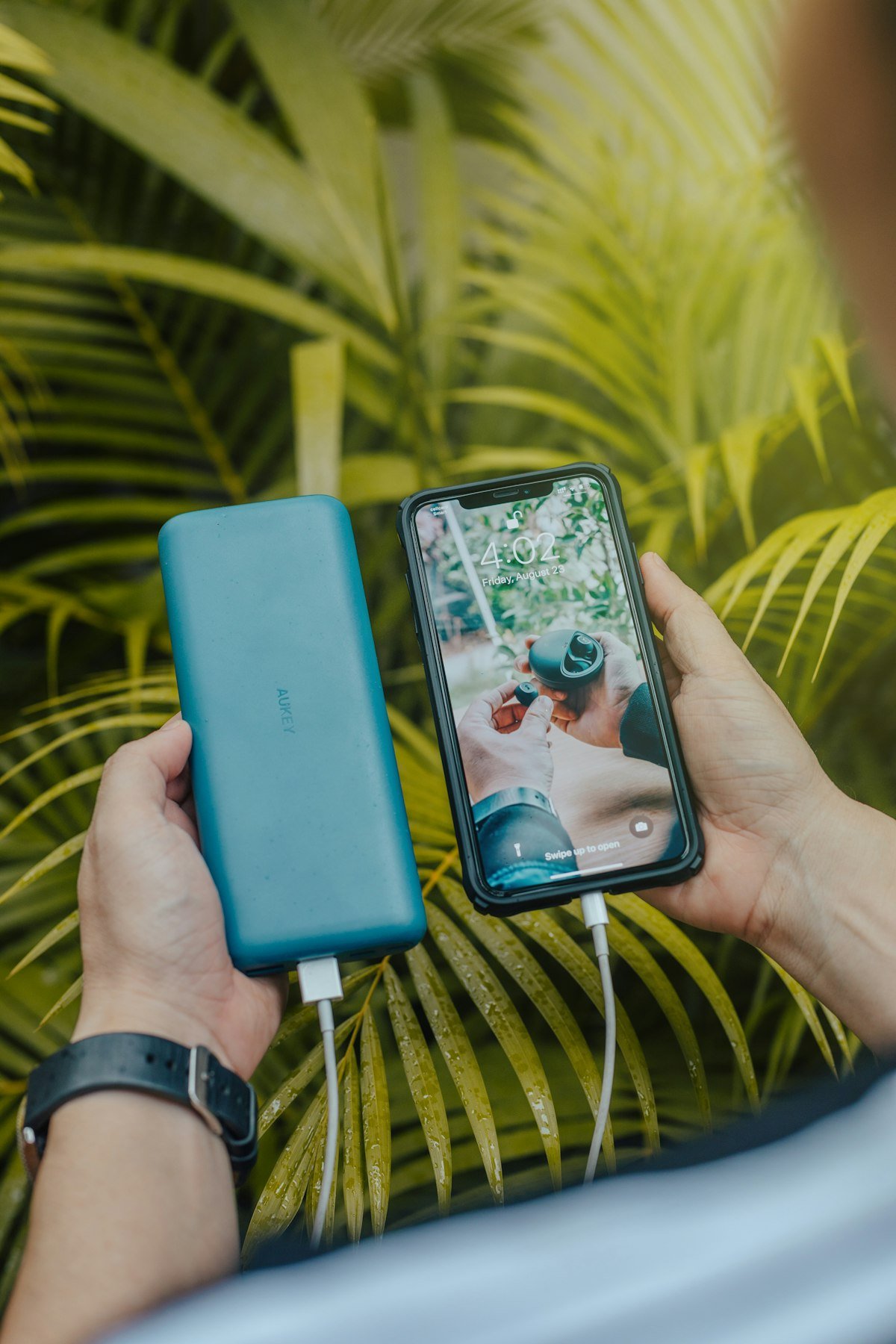
A portable charger is one of those purchases nobody researches until their phone dies at 20% with six hours left in the day. The category is also flooded with near-identical black bricks at wildly different price points, which makes it genuinely hard to tell a good one from a paperweight. We looked at current best-seller and expert-tested rankings — including Engadget’s 2026 power bank testing — cross-checked the picks against real listings, and narrowed it down to four that cover the actual decision most people are making: budget capacity, everyday carry, and travel-friendly wireless.
Best overall value: INIU 20,000mAh Portable Charger
INIU’s 20,000mAh USB-C power bank has become one of the best-reviewed chargers on Amazon, with an average of 4.6 stars across more than 29,000 ratings — a scale of feedback that’s hard to fake and harder to ignore. It charges at 22.5W, which is fast enough for same-day top-ups rather than an overnight trickle, and its 20,000mAh capacity is enough for multiple full phone charges before it needs to be plugged in again. For most people who just want one reliable charger to throw in a bag, this is the safest default pick.
Best compact everyday carry: Anker Nano Power Bank (45W, 10,000mAh)
Per Engadget’s testing, Anker’s smaller-capacity chargers consistently punch above their size, and the Nano Power Bank is the current version of that formula: a 10,000mAh cell — enough for roughly two full phone charges — paired with a built-in retractable USB-C cable, so there’s no separate cord to lose. At 45W output it can also give a meaningful boost to a laptop or tablet in a pinch, not just a phone. It’s the pick for anyone who finds a 20,000mAh brick too bulky for daily carry.
Best for wireless charging: Anker MagGo Power Bank (10,000mAh, PowerCore 10K)
For iPhone users specifically, Anker’s MagGo line adds Qi2-certified magnetic wireless charging at up to 15W — Engadget’s testing found it to be among the fastest wireless charging speeds of any battery pack tested — while still including a USB-C port for wired charging when speed matters more than convenience. The magnetic attachment also doubles as a kickstand, which is a genuinely useful detail for anyone charging a phone while using it hands-free.
Best multi-device pick: Belkin BoostCharge 20,000mAh with Integrated Cable
Belkin’s 20,000mAh power bank ships with a built-in USB-A-to-USB-C cable, carries an Amazon’s Choice badge, and holds a 4.2-star average across more than 5,500 ratings. The larger capacity and multiple port options make it a solid choice for households charging more than one type of device, or for longer trips where recharging the charger itself isn’t convenient.
What actually matters when you’re choosing
Two numbers matter more than any brand name: capacity (mAh), which determines how many charges you get before recharging, and wattage (W), which determines how fast that charging happens. A higher mAh number sounds better but usually means a heavier, bulkier pack — worth it for travel, overkill for a daily commute. Built-in cables are a genuine convenience, not just a gimmick, since a power bank without a cable is useless the one time you actually forget to pack one.
The bottom line
For most people, a well-reviewed 20,000mAh charger like the INIU pick above covers the actual use case — a dead phone battery — without overthinking it. Anker’s smaller and wireless-charging options are worth the premium specifically for people who value pocketability or an iPhone-native magnetic connection over raw capacity.
Product recommendations are based on current best-seller rankings and independent testing coverage, including Engadget’s power bank reviews, cross-checked against live Amazon listings at the time of publication. Prices, ratings, and availability change frequently — always check the current listing before buying. Social Trend Daily is a participant in the Amazon Associates Program and may earn a commission from qualifying purchases made through links in this article, at no additional cost to you. See our Editorial Policy for our sourcing standards.